The Science, Art, and Necessity of Property and Environmental Restoration in New Jersey
New Jersey, known officially as the Garden State, occupies a unique geographic and cultural footprint. Characterized by dense urban centers, sprawling suburban neighborhoods, a bustling industrial heritage, and a fragile, storm-vulnerable coastline, New Jersey experiences a diverse array of challenges. From heavy nor'easters lashing the Jersey Shore to aging historic infrastructure in towns settled before the American Revolution, the state demands constant care, maintenance, and renewal.
At the heart of addressing these challenges is the booming and critical industry of restoration. Whether dealing with catastrophic water damage in a commercial office building, remediating mold in a historic Victorian home, or restoring natural wetlands to protect against storm surges, restoration in New Jersey is both a science and an art.
1. Understanding the Scope of Restoration in New Jersey
When professionals talk about "restoration" in New Jersey, the term generally spans three major categories: property damage restoration (water, fire, and mold), historic architectural preservation, and ecological or environmental restoration. Each sector plays an indispensable role in maintaining the safety, value, and aesthetic beauty of the state.
Property Damage Restoration
New Jersey's weather is notoriously volatile. Situated in a humid continental zone, the state experiences freezing winters, humid summers, and severe tropical storms or nor'easters that sweep up the Atlantic coast.
Water Damage Mitigation: Burst pipes during freezing winter spells and coastal flooding from tropical systems mean water damage is a constant threat. Restoration companies must utilize advanced moisture-detection equipment, high-powered air movers, and dehumidifiers to prevent structural collapse and secondary mold growth.
Fire and Smoke Remediation: Older homes with aging electrical wiring, alongside modern structures, frequently face fire hazards. Restoring a fire-damaged property goes far beyond cleaning soot; it requires neutralizing microscopic ash particles, treating lingering odors with hydroxyl generators, and evaluating structural integrity.
Historic Preservation
New Jersey is one of the original thirteen colonies, boasting a rich colonial, revolutionary, and industrial past. From Morristown—where George Washington’s army wintered—to the Victorian structures of Cape May and the historic brownstones of Hoboken and Jersey City, architectural heritage is fiercely protected. Historic restoration requires specialized craftsmen who understand traditional carpentry, lime-based mortars, and period-accurate materials to ensure that structures are not merely updated, but authentically preserved.
Ecological Restoration
Beyond bricks and mortar, New Jersey’s natural landscapes require intensive restoration. Years of industrial development, suburban sprawl, and severe weather events have strained local ecosystems. Initiatives focused on restoring coastal salt marshes, stabilizing riverbanks, and removing invasive plant species are critical for safeguarding inland communities against rising sea levels and flooding.
2. The Technical Process of Disaster and Property Restoration
Property restoration is a highly regulated, science-driven field. When a disaster strikes a home or business in New Jersey, certified restoration technicians follow strict protocols governed by organizations like the Institute of Inspection Cleaning and Restoration Certification (IICRC).
Phase One: Assessment and Emergency Mitigation
Time is the single most critical factor in property restoration. In water damage scenarios, mold can begin to colonize within 24 to 48 hours.
Source Isolation: Technicians first locate and stop the source of damage—shutting off main water lines or securing damaged roofs with tarping.
Hazard Evaluation: Testing for asbestos, lead paint (common in New Jersey's pre-1978 housing stock), and structural instability is performed immediately.
Extraction and Stabilization: Standing water is pumped out, and specialized drying equipment is deployed to lower relative humidity levels inside the affected space.
Phase Two: Remediation and Cleaning
Once the environment is stabilized, deep cleaning begins. In fire restoration, technicians utilize thermal fogging and ozone treatments to strip odors from porous materials like drywall and framing. In mold remediation scenarios, containment barriers (negative air chambers) are established using HEPA filtration units to prevent microscopic spores from spreading to unaffected areas of the building.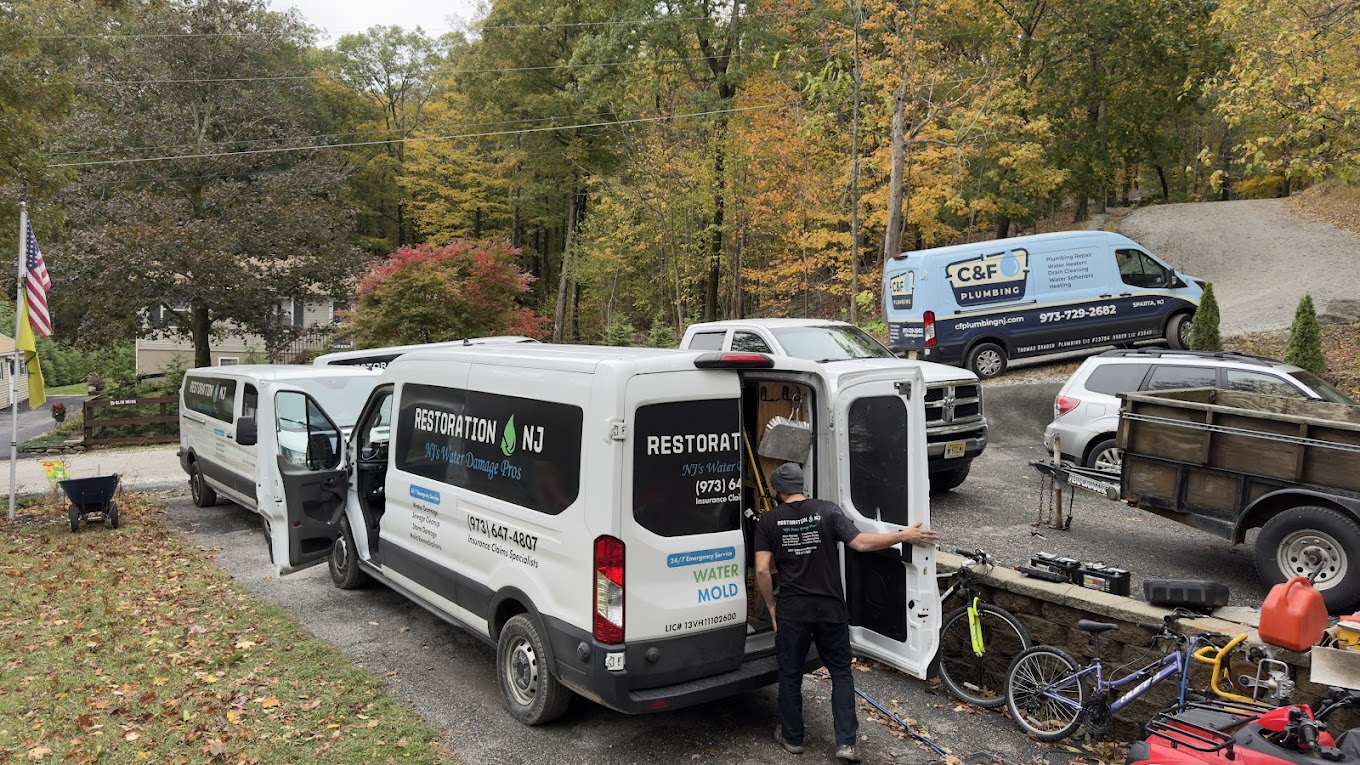
Phase Three: Reconstruction and Return to Pre-Loss Condition
The final phase bridges mitigation and general contracting. Restoring a property often means rebuilding it better and more resiliently than before. In flood-prone regions of New Jersey, such as parts of the Passaic River basin or barrier islands, restoration often incorporates flood-vents, marine-grade subflooring, and closed-cell spray foam insulation to resist future water intrusion.
3. Historic Preservation: Honoring New Jersey's Architectural Roots
Restoring a historic building in New Jersey presents unique regulatory and technical hurdles. The New Jersey State Historic Preservation Office (SHPO) oversees projects that impact historic sites, ensuring compliance with the Secretary of the Interior’s Standards for Rehabilitation.
The Challenge of Materials
Modern building materials—such as Portland cement, vinyl siding, and impermeable synthetic paints—can actually destroy historic structures. For instance, historic brick buildings constructed in the 18th and 19th centuries utilized soft, breathable lime mortar. If a contractor repairs these joints with modern, hard Portland cement, trapped moisture will cause the historic bricks to spall and crumble from within.
Specialized restoration craftsmen in New Jersey meticulously analyze mortar composition, hand-mix traditional lime binders, and source reclaimed lumber or custom-milled timber to match historic specifications. This meticulous attention to detail ensures that the state's architectural history remains intact for future generations.
4. Environmental and Coastal Restoration: Protecting the Garden State
Given New Jersey’s dense population and extensive coastline, environmental restoration is inextricably linked to public safety. Superstorm Sandy in 2012 served as a watershed moment, fundamentally shifting how the state approaches ecological resilience.
Living Shorelines vs. Hard Armor
Historically, communities combated erosion by building concrete seawalls and bulkheads. While these structures offer immediate barrier protection, they often accelerate erosion in adjacent areas and destroy natural intertidal habitats.
Modern ecological restoration in New Jersey increasingly favors "living shorelines." By strategically planting native dune grass, restoring oyster reefs, and reestablishing salt marshes, conservationists harness natural ecosystems to absorb wave energy, filter runoff, and naturally buffer storm surges.
5. Choosing the Right Restoration Professional in New Jersey
For property owners facing damage or looking to restore a legacy structure, selecting the right contractor is paramount. Given the prevalence of storm-chasing scams following major weather events, consumers should verify credentials rigorously.
Certifications: Ensure technicians hold relevant IICRC certifications (e.g., WRT for Water Damage Restoration, ASD for Applied Structural Drying, AMRT for Applied Microbial Remediation).
Licensing and Insurance: In New Jersey, home improvement contractors must be registered with the New Jersey Division of Consumer Affairs. Verify that the company carries comprehensive general liability insurance and workers' compensation.
Local Expertise: A local New Jersey contractor will have intimate knowledge of regional building codes, municipal permitting processes, and common regional vulnerabilities (such as regional soil conditions or local flood zone requirements).
Conclusion
Restoration in New Jersey is far more than a transactional service; it is a vital discipline that preserves the state's rich history, protects its environment, and rebuilds communities after disaster strikes. Whether it is drying out a flooded basement in Bergen County, meticulously repairing a Victorian storefront in Cape May, or fortifying a coastal dune along the Atlantic, restoration professionals ensure that the Garden State remains resilient, beautiful, and deeply connected to its storied past.


Comments
Post a Comment