A Comprehensive Guide for Property Owners
Water damage is one of the most destructive and stressful challenges a property owner can face. Whether it stems from a severe coastal storm, a sudden pipe burst during a freeze, a malfunctioning household appliance, or a hidden plumbing leak, unwanted water can compromise a building's structural integrity within hours.
For residents and commercial property owners, understanding the nuances of South Carolina (SC) water damage restoration is essential. Local climate conditions—characterized by high humidity, coastal weather patterns, and seasonal storms—make rapid, professional intervention crucial. This guide explores the entire water damage restoration lifecycle, the specific challenges faced in the region, and how to protect your investment.
1. Understanding the Scope of Water Damage
When water invades a home or business, it rarely stays where it drops. It travels along gravity paths, wicks up drywall and framing, and saturates subfloors. Professional restoration specialists categorize water damage based on two primary factors: contamination levels and the extent of saturation (classes).
Categories of Water
Category 1 (Clean Water): Originates from a sanitary source such as a supply line, broken clean water pipe, or rain. While safe initially, if left untreated for more than 24 to 48 hours, it can degrade into higher categories.
Category 2 (Gray Water): Contains significant contamination and can cause illness if consumed or exposed to skin. Sources include dishwasher or washing machine overflows and toilet overflows with no solid waste.
Category 3 (Black Water): Grossly contaminated and hazardous. It contains pathogenic agents, toxic materials, and heavy bacteria. Common sources include sewage backups, rising floodwaters from rivers, or standing water that has stagnated.
2. The 6-Step Professional Restoration Process
Effective water damage restoration is not merely a matter of mopping up floors; it is a strict, scientifically backed protocol. Certified restoration technicians follow a standardized six-step process to ensure properties are safely and thoroughly restored.
Step 1: Emergency Contact, Safety, and Inspection
The process begins the moment a technician arrives on-site. Safety is the top priority—inspecting for electrical hazards and structural stability. Technicians perform a detailed moisture mapping assessment using advanced thermal imaging cameras and pin/pinless moisture meters to find hidden water behind walls and beneath flooring.
Step 2: Water Extraction
Physical extraction is the most critical high-leverage step. Using powerful truck-mounted extractors, submersible pumps, and weighted surface tools, crews remove the bulk of standing water. Extracting gallons mechanically drastically cuts down drying times.
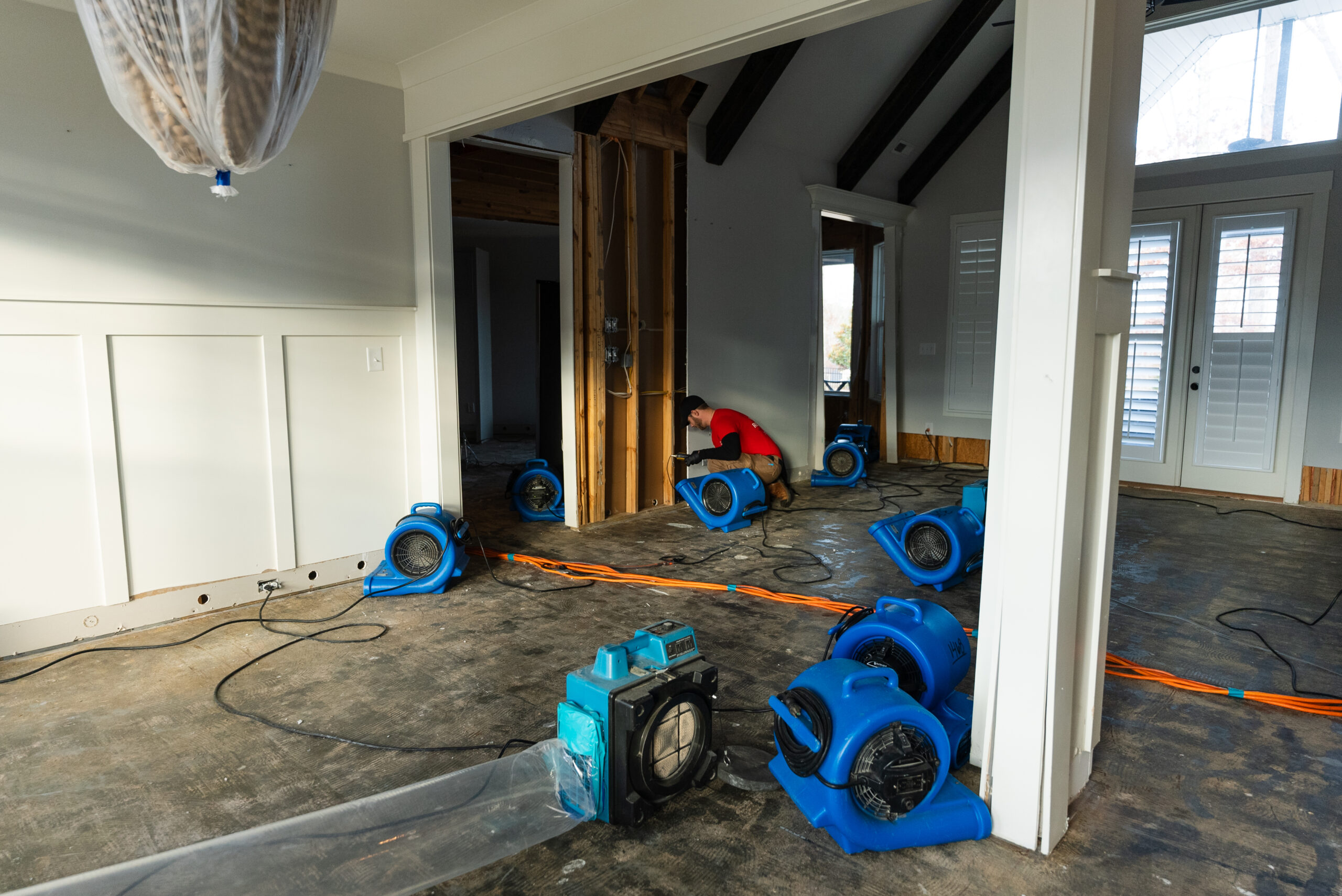
Step 3: Structural Drying and Dehumidification
Once standing water is gone, bound moisture remains trapped in building materials. Technicians deploy industrial-grade air movers to accelerate evaporation and low-grain refrigerant (LGR) or desiccant dehumidifiers to pull moisture out of the air. This phase relies on psychrometry—the scientific management of airflow, temperature, and relative humidity.
Step 4: Cleaning, Sanitizing, and Antimicrobial Treatment
Surfaces and salvageable contents undergo thorough cleaning. Technicians apply EPA-registered antimicrobials to neutralize bacteria, fungi, and mold spores. Air scrubbers equipped with HEPA filters are also utilized to purify indoor air quality.
Step 5: Mold Prevention and Mitigation
In humid environments like South Carolina, mold can colonize within 24 to 48 hours of a water event. Professional restoration targets invisible ambient humidity to prevent outbreaks, and treats existing colonies with professional containment if mold has already begun to spread.
Step 6: Repairs and Reconstruction
The final phase brings the property back to its pre-loss condition. This can range from minor cosmetic fixes—such as painting and replacing baseboards—to major structural reconstruction, including installing new drywall, insulation, flooring, and cabinetry.
3. Why South Carolina Properties Face Unique Risks
South Carolina's unique geographic landscape presents specific property challenges:
High Ambient Humidity: Normal humidity levels in the region can hinder natural drying processes. Without commercial dehumidification equipment, attempting to air-dry a structure locally often results in secondary moisture damage and severe mold growth.
Severe Weather & Coastal Storms: Heavy tropical storms, hurricanes, and flash flooding frequently test residential and commercial foundations. Floodwaters bring heavy silt, debris, and biohazards that require specialized Category 3 protocols.
Plumbing Freezes: Though winters are generally mild, sudden hard freezes can catch older plumbing infrastructure off guard, leading to split supply lines and indoor flooding.
4. Key Best Practices for Property Owners
When disaster strikes, your immediate actions dictate the severity and cost of the final recovery:
Crucial Rule: Never enter standing water if there is any chance it is in contact with electrical outlets or exposed wiring. Shut off the main power breaker if it is safe to access.
Act Immediately: Call a professional restoration service as soon as the source is stopped. Delays exponentially increase restoration costs and structural deterioration.
Document Everything: Take clear photographs and videos of all damaged items, standing water levels, and structural issues before cleanup begins. This documentation is vital for insurance claims.
Avoid DIY Mistakes: Do not rely on household box fans or open windows alone during high-humidity days, as this can pull moisture deeper into porous framing elements or spread mold spores.
Review Your Insurance Policy: Understand what your homeowner's or commercial policy covers regarding water backup, sudden pipe bursts, and whether you require separate flood insurance coverage.
Conclusion
Water damage is overwhelming, but navigating the aftermath does not have to be a guessing game. By understanding the science of structural drying and partnering with certified professionals who understand local environmental conditions, you can safeguard your property, protect your health, and ensure a complete, seamless recovery.


Comments
Post a Comment